|
19th Sunday |
|
|
Dear Preachers: PRE-NOTE: I don’t want to forget to say “thank you” for your response to our summer appeal. We received donations for our internet ministry of the Word. We always try to write thank you notes. But sometimes the donations are anonymous; sometimes they have no return address. So, thank you all, especially the “shy ones.” What’s the might prophet Elijah doing hiding out in a cave? 1 Kings tells us he is taking shelter – but not because the weather is inclement. He has fled for his life after alienating himself from King Ahab and infuriating Queen Jezebel by defeating 450 prophets of Baal. An angel guided Elijah to Sinai (Mt. Horeb), the same mountain where Moses met the Almighty.
God addresses Elijah in the cave and asks, “Why are you here, Elijah?” In response he speaks his lament to God, describing Israel’s infidelities against the covenant and the slaughter of the prophets who were on Elijah’s side. “I alone am left and they seek to take my life” (19:10). So, it is pretty clear why Elijah is in the cave: his life is in danger and God seems to have let him down and so he is hiding out. Who can blame him? With not so much as an apology or consoling word God tells Elijah to “go outside and stand on the mountain before the Lord, the Lord will be passing by.”
In times of crisis and disappointment don’t you think God should show up with signs of power and convincing displays – like the first manifestations Elijah witnesses, the strong and heavy wind that rends the mountains and crushes the rocks; the earthquake and the fire? When life was closing in on Elijah all he seemed to get was a “tiny whispering sound.” That would give me reason for one long and loud complaint to God, “Where are you when we need you?!”
Where is God amid the world’s groans and pain? Where is God in a church still reeling from scandal? Where is God when the politicians choose to cut aid to poor children? Where is God in a never-ending war? Where is God when non-combatants are blown up by terrorist bombs or “friendly fire?” Where is the God of peace in the seeming insurmountable divisions in the Holy Land? Thus, I can understand Elijah’s inclination to hide out in a cave and, as we hear in the previous section and pray for death (19: 4). “This is enough, O Lord! Take my life, for I am no better than my fathers.” There are moments when we want more than a faint whisper from God.
After God’s manifestation to Elijah, God again asks what God asked previously, “Elijah, why are you here?” (19: 13b). The prophet again lays out his complaint to God about the people’s infidelities and the murder of all the other prophets – good enough reason for God to dismiss the beloved prophet from further trials and set him free to go where he wishes. But God has other plans and Elijah is sent back to his task.
Moses went up Sinai and he also had divine manifestations – wind, storm, earthquakes and fire (Ex. 19: 18ff). These signs may announce God’s presence, but they don’t constitute the presence itself. The “tiny whispering sound” seems closer to the truth: God is imperceptible, though present to us. Elijah will have to call the people back to fidelity to God and the covenant; to a faith not based on spectacles and signs of power, but on a relationship of love and trust in God.
Both Moses and Elijah appeared with Christ on another mountain, at the Transfiguration. When people demanded signs of power from Christ, like storm, fire, wind and earthquake, he refused to give them. Instead, he invited people to trust in him even without instant relief and spectacle. Elijah got the message; he set out on his difficult journey trusting God would support him and not abandon him in his coming trials. As he went forward he would have to continue to listen to the still voice of God within – just as all faithful people must.
When we find ourselves withdrawing to a cave of fear, defeat, discouragement or despair, we might draw the conclusion that we are all alone in our struggle. Or we can make the impossible leap of faith that says, “I believe God is with me, even in the sound of silence.” It turns out, Elijah’s fearful flight away from Ahab and Jezebel has set him back on the path to absolute dependance on God. God has not abandoned him after all. God has not given up on Elijah; so Elijah should not give up on God.
Just prior to today’s gospel is the narration of the multiplication of the loaves. (It was last Sunday’s gospel.) Imagine the excitement that would have accompanied that miracle. The people might have concluded, “Here we have someone who can take care of all our ills and hungers!” Religion sometimes sounds like that. If I could only “get it right”; be on the right side of God by doing my religious practices faithfully and properly – then maybe God will take care of my problems. But Jesus wanted his disciples out of that place, away from the excited crowds, so he “made the disciples get into a boat.”
The disciples did what they were told to do; but that didn’t prevent them from getting caught up in a storm. They felt their separation from Jesus; felt as we sometimes do, that they were going to have to make it on their own, “tossed about by the waves, for the wind was against them.” Doesn’t that describe the situations we sometimes find ourselves in? I am sure if we pause and reflect we could easily name the waves we struggle against in our lives—waves we encountered yesterday; if not yesterday then surely tomorrow....separation from loved ones, death and divorce, loneliness, questions about the meaning of our lives, concerns about family and friends, the church and the world.
We are tempted to ask a question faithful people have always faced: Where is God when I am in need? Where is Jesus in the midst of the storm? Matthew tells us he came to his disciples “during the fourth watch of the night.” What took him so long? We don’t understand the delay, especially considering the intensity of the struggle.
Maybe Jesus is not supposed to be “Mr. Fix-it.” He may not immediately end the storm, but instead enables us, with him, to walk on the stormy seas. He reprimands his disciples for not trusting his presence and strength while the seas were raging. It turns out they may not have felt his presence, but still, they were getting through the storm.
Jesus sent his disciples off in the boat, dismissed the crowds and then went off to pray. Jesus’ powers are manifested right after prayer. The power to overcome storms seems to come from praying. Jesus prays at crucial points in the gospels: before important decisions; before and during his suffering and here, before he calms the storm. He is praying his disciples through the storm.
Would some of the storms we face be more manageable if we put aside time for prayer? To others that might seem like a waste of time during an emergency. But the prayers and expressions of dependency on Christ aren’t made on a retreat in the mountains somewhere, but in the midst of the crisis – brief prayers expressing trust and dependency on the God who speaks to us in whispers of assurance.
What are we doing in church today? We are storm walkers – asked to walk the stormy seas of involvement in complex issues, as well as family and community need. The waters may not be calm, but we are not alone. We keep our eyes fixed on Jesus and one another. He reaches out to each of us through the hands of this church community. We have gathered again to be reminded that we have company. Our companions are those who break bread with us today. Sometimes we are the ones in need, and they offer us the bread of their lives to help us get through the storm. Other times we see someone who needs us for strength, courage and assistance and we reach out to them. After all, we are companions in the boat on stormy seas who share the Bread of Life in many ways with one another.
Click here for a link to this Sunday’s readings: https://bible.usccb.org/bible/readings/080926.cfm
ONE GOOD BOOK FOR THE PREACHER
THE PRIESTHOOD OF THE FAITHFUL: KEY TO A LIVING CHURCH, by Paul J. Philibert, OP
[This is a book our community shared and discussed with the author. We liked it and thought you might too.]
The New Testament describes the baptized as a “holy priesthood” and “a priestly people.” Vatican II clearly taught that the baptized become “a holy priesthood.” Their personal fidelity and lives led in loving obedience to the Gospel become “spiritual sacrifices” offered along with the body of the Lord in the Eucharist. The Priesthood of the Faithful explores this key doctrine of Christian faith and examines its significance for the spiritual growth and revitalization of the church. It focuses on the prophetic, pastoral, and priestly roles of the faithful with the aim of helping people experience their own lives as the fruitful blossoming of Christ’s grace in the world.
[The publisher’s description of this book.] Link to publisher: http://www.litpress.org/Detail.aspx?
19th Sunday – August 9, 2026 – Cycle A “Justice shall walk before him and prepare the way of his steps.”
—Psalm 85: 14
When I read this scripture passage, it reminded me of a poem I read many years ago that has always inspired me.
The Bridge Builder By: Will Allen Dromgoole
An old man traveling alone highway Came at the evening cold and gray To a chasm vast & deep & wide, Through which was flowing a sullen tide. The old man crossed in the twilight dim, The sullen stream held no fears for him; But he turned when safe on the other side, And builded a bridge to span the tide. “Old man” cried a fellow pilgrim near, “You’re wasting your time in building here. Your journey will end with the closing day; You never again will pass this way. You have crossed the chasm deep and wide, Why build you this bridge at even-tide?” The builder lifted his old gray head; “Good friend, in the path I have come,” he said, “There followeth after me today A youth whose feet must pass this way, This stream which has been as naught to me, To that fair-haired youth may pitfall be; He, too, must cross in the twilight dim— Good friend, I am building this bridge for him.”
Barbara Molinari Quinby, MPS, Director Office of Human Life, Dignity, and Justice Ministries Holy Name of Jesus Cathedral, Raleigh, NC
Mini-reflections on the Sunday scripture readings designed for persons on the run. “Faith Book” is also brief enough to be posted in the Sunday parish bulletins people take home. From today’s Gospel reading:
During the fourth watch of the night, Jesus came toward the disciples [in the storm] walking on the sea. When the disciples saw him walking on the sea they were terrified. “It is a ghost,” they said, and they cried out in fear. At once Jesus spoke to them, “Take courage, it is I, do not be afraid.”
Reflection:
After the multiplication of the loaves and fish, Jesus sent his disciples off in the boat, dismissed the crowds and then went to pray. Jesus’ powers to calm the storm are manifested right after prayer. The power to overcome storms seems to come from praying. Jesus prays at crucial points in the gospels: before important decisions; before and during his suffering and here, before he calms the storm. He is praying his disciples through the storm.
So, we ask ourselves:
· Would some of the storms we now face be more manageable if we put aside time for prayer? · Is there someone we know experiencing their own storms we could be praying for at our Eucharist?
POSTCARDS TO DEATH-ROW INMATES
---Pope Francis
Inmates on death row are the most forgotten people in the prison system. Each week I am posting in this space several inmates’ names and locations. I invite you to write a postcard to one or more of them to let them know that: we have not forgotten them; are praying for them and their families; or whatever personal encouragement you might like to give them. If the inmate responds, you might consider becoming pen pals.
Please write to:
James H. Watts #0428143 (7/19/2001) Bryan C. Bells #0592464 (8/24/2001)
Central Prison PO Box 247, Phoenix MD 21131 (While the prison is in Raleigh mail for inmates is processed at this address)
For more information on the Catholic position on the death penalty go to the Catholic Mobilizing Network: http://catholicsmobilizing.org
“First Impressions” is a service to preachers and those wishing to prepare for Sunday worship. It is sponsored by the Dominican Friars. If you would like “First Impressions” sent weekly to a friend, CLICK HERE.
If you would like to support this ministry, please send tax deductible contributions to:
Fr. Jude Siciliano, OP Holy Rosary Priory 3600 Travis Street Houston, TX 77002-9591
Make checks payable to: Dominican Friars. Or go to our webpage to make a secure online donation: https://www.PreacherExchange.com/donations.htm
FREE EMAILS:
We have two English email lists available: 1. A preacher's early reflections on the upcoming Sunday's readings and liturgy, always at least one week ahead of the Liturgical Calendar. “A tool to help Preachers prepare for their next trip to the Ambo.” Available in Spanish & English and authored by Fr. Jude Siciliano, OP. 2. Click Here to Sign Up. 2. “VOLUME II” • These reflections follow the Liturgical Calendar and appear here about mid-week each week. They are written by various guest authors. • If you would like to submit a reflection of your own, then Click Here to send it as a “Request to Post” to the Webmaster. Deadline is Monday of each week for the upcoming Sunday.
OUR WEBSITE:
https://www.PreacherExchange.com - Where you will find Preachers Exchange, which includes “First Impressions,” and “Volume 2” as well as articles, book reviews, daily homilies and other material pertinent to preaching and Scripture reflection.
FOR INFORMATION OF “ANY KIND” OR TO MAKE A SUGGESTION: Click Here
(Always includes the 6 latest reflections with the newest first.)
• |
|



























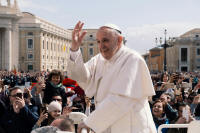 “One has to strongly affirm that
condemnation to the death penalty is an inhuman measure that humiliates personal
dignity, in whatever form it is carried out.”
“One has to strongly affirm that
condemnation to the death penalty is an inhuman measure that humiliates personal
dignity, in whatever form it is carried out.” Jim Haselden #0561943 (On death row since 6/6/2001)


