|
Archive:
|
 “FIRST
IMPRESSIONS”
3rd SUNDAY OF ADVENT (B) DECEMBER 6, 2026
Isaiah 40: 1-5, 9-11; Psalm 85; 2 Peter 3: 8-14; Mark 1: 1-8
By Jude Siciliano, OP
Dear Preachers:
We invite you to support our bilingual ministry of God’s Word, "Preacher Exchange," which includes "First Impressions." Our free internet preaching and liturgical ministry seeks to share the Gospel, deepen faith, and bring the richness of our Catholic liturgical tradition to people wherever they may be. Your generosity will help sustain this ministry and, importantly, support the lives and ministry of our Dominican friars, assist with the needs of our parish community, and provide food and essential assistance to the local poor who come to us seeking help. Every contribution, large or small, makes a difference. By supporting "First Impressions," you are helping us continue to preach the Gospel not only through words and prayer but also through concrete acts of compassion, service, and love for our neighbors.
Send tax deductible checks, Payable to: Dominican Friars:
"First Impressions"
Dominican Friars
3600 Travis Street
Houston, Texas 77002
Or: Click here for a secure tax-deductible online donation.
How would you summarize Advent? – Hope? Waiting? Longing? Expectation? On the first Sunday of Advent we heard the prophet Isaiah pray, “Return for the sake of your servants.... rend the heavens and come down.” We heard Jesus advised his disciples, “Be watchful! Be alert!” On the second Sunday Peter warned, “The day of the Lord will come like a thief....” And “...we await a new heaven and a new earth.” John the Baptist announced, “One mightier than I is coming....” The first two weeks certainly had us looking and waiting for God to act. This Sunday has a bit more action in it – human action – as various people hear the call of God and do something.
The pattern today seems to be a “call – response” dynamic. Isaiah tells us about his anointing by God’s Spirit. That is just part of Isaiah’s experience with God. God’s blessing on Isaiah isn’t just for his own inspiration and edification, for God has sent him, he tells us to bring “glad tidings to the poor.” God has a purpose, has work to be done and Isaiah is the instrument who will accomplish God’s purposes.
At Eucharist today we might ask the same Spirit who anointed Isaiah for his task to give us the wisdom to discern what work God has in mind for us at this moment of our lives. Isaiah was sent to the nations, especially those eager to hear that God was coming to help them. Ours might not be such a broad or universal call. Nevertheless, like Isaiah, each baptized Christian has been called my name to proclaim, through words and deeds, “glad tidings” to those waiting in need of it. While we may admire the gifts and service other servants of God have, we have been uniquely gifted ourselves for service in God’s name. Each of us has our call; we have something to do – what is it?
In our psalm response, Mary proclaims God’s greatness – for though she is “lowly,” the Spirit of God has come upon her for a special mission. While she will give birth to the savior, even before this happens, she is already responding to her call as she opens her mouth and announces what God has done for her and will do for the poor who have turned to God for help. When the Spirit of God comes upon someone, like Isaiah and Mary, they cannot keep the news of God’s goodness to themselves, they must go and proclaim it to others.
Which is what people in our parishes do. They have heard a call from God; they have been “anointed to bring glad tidings to the poor,” and so they do. They minister to the grieving; proclaim the scriptures in the assembly; sit with the dying and comfort their families; take the Eucharist to the aged and infirmed; legislate on behalf of the homeless; serve on community boards for the homeless; teach good environmental practices to school children, etc. “Bringing glad tidings to the poor,” has as many faces as the members of our faith communities who have been baptized and anointed by the Spirit to fulfill God’s good work on earth.
“Hear ye, hear ye!” It’s the way trials begin here in the States. An officer of the court calls those assembled into the court room to attention and announces the arrival of the judge. The trial is beginning. John’s gospel has a similar beginning for very early we are introduced to John the Baptist. He was already well known by those early hearers of his gospel; his birth had been described by Luke, and the three Synoptics describe his early preaching and baptizing mission. In fact, John was so renowned that some saw him as a greater prophet than Jesus. So, John the evangelist introduces us to the Baptist and clearly delineates his role: first by a series of “nots.” He is “not the Christ...not Elijah...not the Prophet.” John may have been immensely popular among those who heard and followed him, but he was only a precursor, anointed by God for his specific task: he was to announce Jesus’ coming.
At the end of this gospel Jesus will be put on trial, found guilty and executed. But this gospel shows us that we humans are really the ones on trial. The trial has begun and the first witness, John the Baptist, has been called forth to give witness to Jesus, who will describe himself in this gospel as “the way, the truth and the life.”
John is just the first to come forward to bear witness to Jesus – more will follow. In particular, Jesus’ signs will testify to his identity: he will provide food for the hungry, he is the living bread; he will give water to those who thirst, he is living water; he will raise Lazarus from the dead, he is life itself; he will open the eyes of the blind, he is the light of the world. Indeed, Jesus will tell those who confront him for one of the signs he performed, the curing of the cripple man on the Sabbath, that his works show that “the Father has sent me...and gives testimony on my behalf” 5; 37). God also bears witness to us about Jesus.
Those who hear this gospel and give ear to these witnesses will have to decide: is Jesus the One on whom we will place our faith? Will we follow him and reject what will not satisfy our hunger or quench our thirst for life – as Jesus does? If a trial has begun and witnesses are being called, then we being asked to decide: shall we accept what this gospel will say about Jesus? If so, how will it affect our lives.
Of course, if we profess our faith in Christ by accepting the witnesses in John’s gospel, then we too will become another in the unbroken line of witnesses since John the Baptist. How we act... what we say... who we are...will either give witness to Jesus or deny him. People will draw their own conclusions about us: “Yes, that person is a true follower of Jesus, their life gives clear witness to him.”
In the light of the witness theme which runs through John’s gospel, it is obvious that those who accept the testimony of the witnesses, must also live a public life of faith. Christianity is not a private religion, kept to oneself, but each of us must live up to the identity our baptism has given us as “lights of the world.” On this Sunday, when the third candle on the Advent wreath is lighted, we are reminded that we too have been set aflame by the one the Baptist was anointed to proclaim and like him we too must bear witness. “Hear ye, hear ye.”
Click here for a link to this Sunday’s readings:
https://bible.usccb.org/bible/readings/121326.cfm
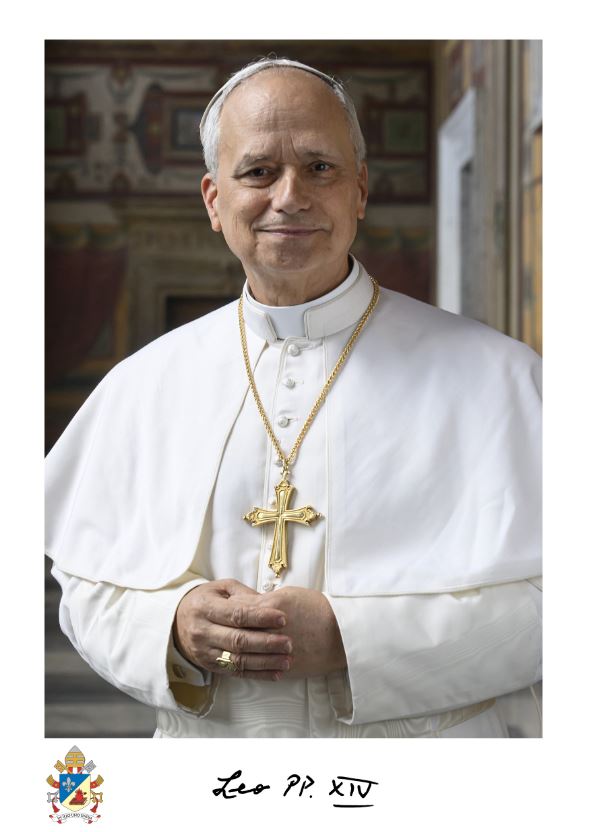
By its very nature, Christian love is prophetic: It works miracles and knows no limits. It makes what was apparently impossible happen. Love is above all a way of looking at life and a way of living it. A church that sets no limits to love, that knows no enemies to fight, is the church that the world needs today.
-------Pope Leo XIV

Brothers and sisters: Rejoice always.
—1 Thessalonians 5:16-24
Have you ever stopped to ponder the difference between joy and happiness? In this, the Third Sunday of Advent, we find the readings specifically talking about joy. We even have different color in the priest’s chasuble—pink/rose—to help us think about joy. What are some things that scripture and our traditions teach us about joy?
Christian joy is a gift of the Spirit accessible even in hard times (1Thessalonians 1:6). Our late Pope Francis states, in Evangelii Gaudium, that, “the most beautiful and natural expressions of joy which I have seen in my life were in poor people who had little to hold on to” (7). He develops this more fully as follows: True joy does not come from things or from possessing, no! It is born from the encounter, from the relationship with others, it is born from feeling accepted, understood and loved, and from accepting, from understanding and from loving; and this is not because of a passing fancy but because the other is a person. Joy is born from the gratuitousness of an encounter! It is hearing someone say, but not necessarily with words: “You are important to me”. This is beautiful.... And it is these very words that God makes us understand. In calling you God says to you: “You are important to me, I love you, I am counting on you” (7/6/13). http://w2.vatican.va/content/francesco/en/speeches/2013/july/documents/papa-francesco_20130706_incontro-seminaristi.html
Joy and its riches do not come from the material things of this world. We can look to our saints for examples of joy being found in following Christ and serving others. When St. Francis embraced a leper, the leper was the “mediator of light. . .for Saint Francis of Assisi” (Lumen Fidei, 57). In the suffering leper, he recognized the suffering Christ. We learn that by welcoming the poor and needy, we welcome Jesus in our midst, and the presence of Jesus is always a cause for celebration.
Joy comes from within because joy and peace are the fruits of self-giving love. Those who live only for themselves will have great difficulty understanding this concept because to find joy is to live a life of service to others, especially in relationships with the poor.
Rejoice all ways!
Barbara Molinari Quinby, MPS, Director
Office of Human Life, Dignity, and Justice Ministries
Holy Name of Jesus Cathedral, Raleigh, NC
Mini reflections on the Sunday scripture readings designed for people on the run. “Faith Book” is also brief enough to be posted in the Sunday parish bulletins people take home.
From today’s Isaiah reading:
The spirit of the Lord God is upon me,
because God has anointed me and has sent me,
to being glad tidings to the poor.
Reflection:
We are invited to stand with God who wants an end to injustice and all that afflicts God’s creatures. This Advent text offers hope for personal and community transformation and assures us that God will work with us as we attempt to bring about what Isaiah envisioned and Christ came to fulfill – justice, healing and peace throughout the world.
So, we ask ourselves:
-
What “glad tidings” do I hear for myself this Advent?
-
How can I share that good news with others?
POSTCARDS TO DEATH-ROW INMATES
“Someone who says, ‘I’m against abortion’ but says, ‘I’m in favor of the death penalty,’ is not really pro-life.”
Pope Leo XIV
Inmates on death row are the most forgotten people in the prison system. Each week I am posting in this space several inmates’ names and locations. I invite you to write a postcard to one or more of them to let them know: we have not forgotten them; are praying for them and their families; or whatever personal encouragement you might like to give them. If the inmate responds, you might consider becoming pen pals.
Please write to:
John Burr #0058316 (On death row since 4/21/`993)
Eugene Decastro #0104984 (4/28/1993)
Warren Gregory #0156518 (5/18/1993)
Central Prison PO Box 247, Phoenix MD 21131
(While the prison is in Raleigh mail for inmates is processed at this address)
For more information on the Catholic position on the death penalty go to the Catholic Mobilizing Network: http://catholicsmobilizing.org
“First Impressions” is a service to preachers and those wishing to prepare for Sunday worship. It is sponsored by the Dominican Friars. If you would like “First Impressions” sent weekly to a friend, CLICK HERE.
If you would like to support this ministry, please send tax deductible contributions payable to “Dominican Friars” to:
Fr. Jude Siciliano, OP
Holy Rosary Priory
3600 Travis St.
Houston, TX 77002-9591
Or click here to make a secure tax-deductible online donation.

